Blog

  • Back Pain That Won’t Go Away? Signs You Need Physical Therapy in Albuquerque

    Back Pain That Won’t Go Away? Signs You Need Physical Therapy in Albuquerque

    Reviewed by Thomas Staton, PT, DPT, Bear Canyon Therapy Associates

    A sore back after a long weekend of yard work or a rough night’s sleep is something almost everyone deals with sooner or later — most adults experience low back pain at some point in their lives. Most of the time, a few days of rest, gentle movement, and over-the-counter pain relief is genuinely all it takes. But sometimes back pain sticks around longer than it should, or shows up alongside other signals that your body needs more support than rest alone can give it. If you’re in Albuquerque, Rio Rancho, or the surrounding areas and wondering whether your back pain has crossed that line, here’s what physical therapy for back pain can offer — and the signs that it’s time to stop “waiting it out “toughing it out.”

    Why Rest Alone Doesn’t Always Work

    Rest reduces irritation in the short term, but it doesn’t address the underlying reason your back is hurting — often weakness, stiffness, or movement patterns that put extra load on your spine. Too much rest can actually work against you: after a few days, prolonged inactivity leads to stiffer joints and weaker core and back muscles, which can extend your recovery rather than speed it up. Physical therapy identifies what’s actually driving your pain and gives your body a plan to rebuild strength and movement safely.

    What Are the Signs Your Back Pain Needs More Than Rest?

    A physical therapy evaluation is worth considering if you notice any of the following:

    • Pain that lasts longer than one to two weeks despite rest and basic self-care
    • Pain that radiates down one or both legs, or comes with numbness, tingling, or weakness
    • Pain that limits everyday activities — bending to tie your shoes, lifting groceries, sitting through a workday
    • Back pain that keeps returning even after it seems to resolve
    • Stiffness that’s noticeably worse in the morning and slow to loosen up
    • Any loss of bladder or bowel control, or sudden leg weakness — this needs immediate medical attention, not physical therapy

    How Long Does Back Pain Usually Take to Heal?

    Most simple, mechanical back pain improves within a few weeks with the right combination of movement and rest. If your pain hasn’t meaningfully improved after about two weeks, or if it’s affecting how you move, sleep, or work, that’s a reasonable point to have it evaluated rather than waiting it out further. Catching it earlier generally means a shorter, simpler path back to normal activity, as well as prevention of your back pain coming back again in the future!

    What Happens During a Back Pain Evaluation at Bear Canyon?

    When you come in for a back pain evaluation, Thomas and Will take the time to understand how your pain started, what makes it better or worse, and how it’s affecting your daily life — whether that’s hiking the Sandia foothills, working in the yard, or just getting through a workday comfortably. From there, they assess your movement, strength, and flexibility to build a plan around your body and your goals, not a generic exercise handout.

    Simple Things You Can Do Right Now

    While you decide whether an evaluation makes sense, a few things can help in the meantime:

    • Keep moving gently — short walks are usually better than staying in bed
    • Alternate ice and heat, whichever feels better for you, for 15–20 minutes at a time
    • Avoid prolonged sitting; get up and move every 30–45 minutes
    • Notice what specific movements or positions make your pain better or worse — that information is genuinely useful for a PT evaluation

    These steps are meant to keep you comfortable, not to replace an evaluation if your pain fits the signs above.

    Frequently Asked Questions

    Should I see a physical therapist or a doctor first for back pain?

    Either can be a good starting point. In New Mexico, you can see a physical therapist directly without a doctor’s referral, which often means getting started on treatment sooner. If your symptoms include leg weakness, numbness, or loss of bladder or bowel control, seek medical care right away.

    Will physical therapy for back pain hurt?

    A good physical therapy program should not cause sharp or worsening pain. Some mild muscle soreness after activity is normal, similar to starting a new exercise routine, but your plan should be adjusted if movements consistently increase your pain.

    How many physical therapy sessions will I need for back pain?

    It varies by person, but many patients with mechanical low back pain see meaningful improvement within 4 to 8 sessions over several weeks. Your plan is based on your specific evaluation, goals, and how your body responds to treatment.

    Can physical therapy help prevent back pain from coming back?

    Yes — a large part of physical therapy focuses on building the strength, flexibility, and movement habits that reduce the chance of future flare-ups, not just resolving the current episode.

    If your back pain has lasted more than a week or two, keeps coming back, or is getting in the way of the things you enjoy about living in Albuquerque, you don’t have to just wait it out. Schedule an evaluation with Bear Canyon Therapy Associates and let’s build a plan to get you moving comfortably again.

  • Introducing Our New Website — Built for Physical Therapy Patients All Across Albuquerque and Rio Rancho

    Introducing Our New Website — Built for Physical Therapy Patients All Across Albuquerque and Rio Rancho

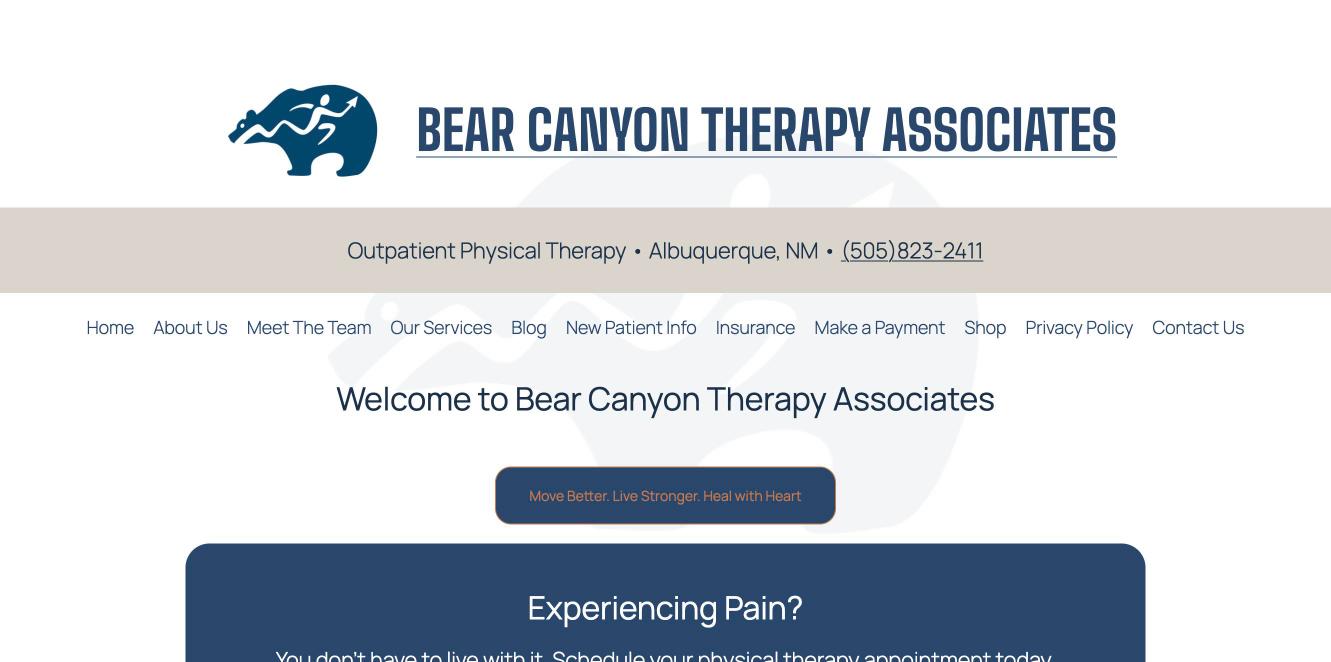
    We’re excited to share something we’ve been working on behind the scenes: a brand-new up-to-date website for Bear Canyon Therapy Associates current AND future patients! Whether you’re dealing with knee pain, recovering from an injury, or simply looking for trusted physical therapy in Albuquerque, NM, our new site is designed to make it easier to find the pain management, rehabilitation, and mobility resources you need — right when you need them.

    Bear Canyon Therapy Associates new website homepage for physical therapy in Albuquerque, NM
    Our new homepage — built to help Albuquerque patients find answers faster.

    A Fresh Look, Built Around Our Patients

    The new bearcanyontherapy.com is cleaner, faster, and easier to navigate on regardless of device. You’ll find clear information about our outpatient rehabilitation services, the new patient paperwork you can complete ahead of your visit, and details on the conditions we treat most often — from post-surgical rehab and sports injuries to chronic back, neck and shoulder pain. Our goal is simple: make it as easy as possible for people across Albuquerque, NM to get the pain relief and recovery support they’re looking for.

    What Our Patients Are Saying

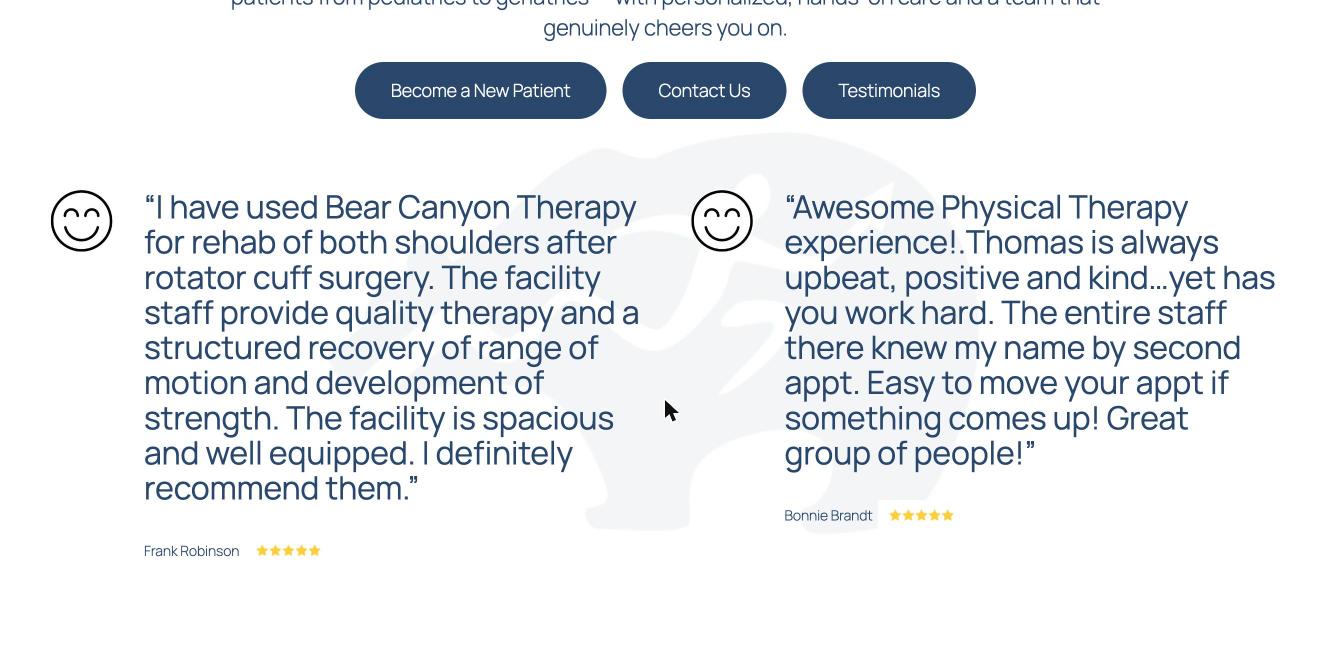
    Nothing tells our story better than the people we’ve helped. Patients like Frank, who came to us for rehab after rotator cuff surgery on both shoulders, and Bonnie, who calls our team “a great group of people,” are exactly why we do this work. You’ll find more real patient testimonials throughout the new site.

    Patient testimonials for Bear Canyon Therapy Associates physical therapy clinic in Albuquerque
    Real reviews from real Bear Canyon Therapy Associates patients.

    Meet Your Physical Therapy Team in Albuquerque

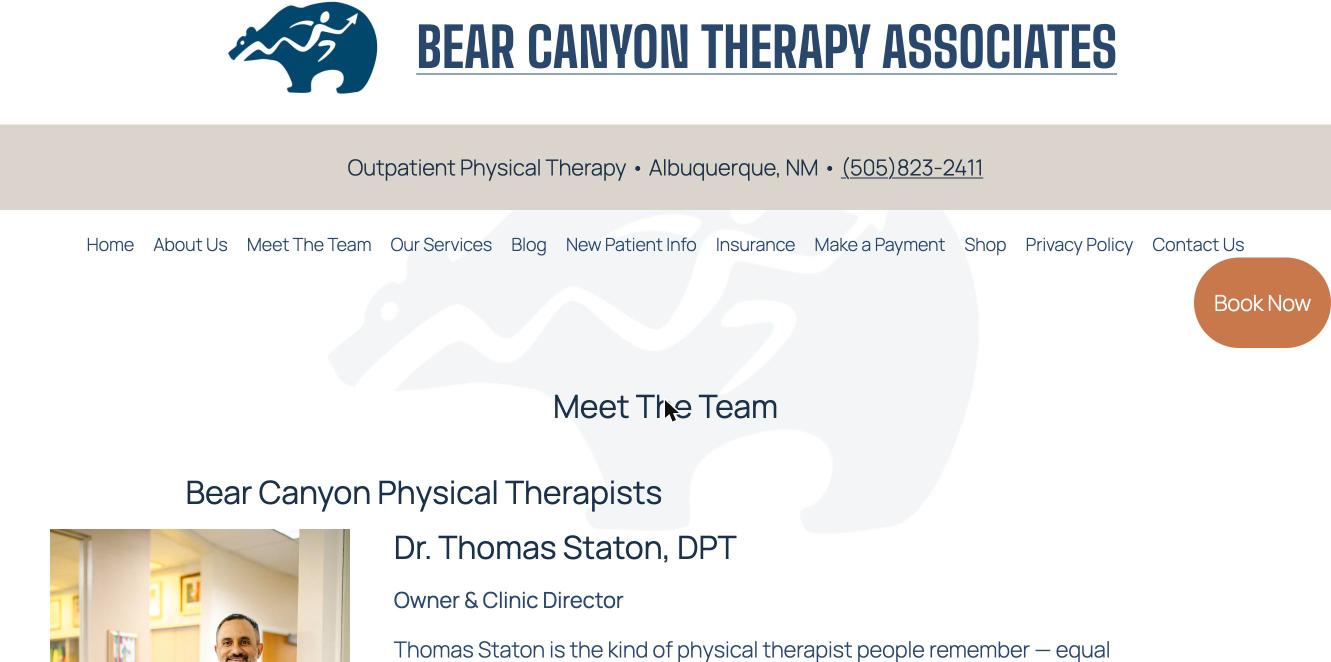
    Our new Meet the Team page introduces you to the clinicians behind your care, led by Dr. Thomas Staton, DPT, Owner and Clinic Director. Thomas brings over 15 years of experience helping patients move better, live stronger, and heal with heart — and he’s excited for more of Albuquerque and Rio Rancho to get to know our team through the new site.

    Dr. Thomas Staton, DPT, physical therapist and clinic director at Bear Canyon Therapy Associates in Albuquerque
    Dr. Thomas Staton, DPT — Owner & Clinic Director

    Frequently Asked Questions

    What conditions does Bear Canyon Therapy Associates treat?

    We provide comprehensive outpatient physical therapy for patients of all ages, including pain management, falls prevention, post-surgical rehabilitation, youth (and adult) sports injuries, shoulder pain, back pain, and general mobility issues.

    Do you treat shoulder pain and rotator cuff injuries in Albuquerque?

    Yes. Shoulder rehabilitation, including recovery after rotator cuff surgery, is one of the conditions we treat most often at our Albuquerque, NM clinic.

    How do I schedule an appointment?

    You can request an appointment directly through our new website’s Contact Us page, or call us at (505) 823-2411. New patients are always welcome.

    We’d love for you to explore the new site for yourself. If you’re in Albuquerque and dealing with pain that’s holding you back, schedule an appointment today — we’re here to help you move better, live stronger, and heal with heart.

  • Back-to-School Backpack Safety: Protecting Your Child’s Growing Spine

    It’s that time of year again — school supply lists, first-day photos, and backpacks that somehow seem to get grow every August, as fast as your child. If you’ve ever watched your child hoist their bag onto one shoulder and lean forward just to walk, you’re not imagining it: an overloaded or poorly worn backpack can put real strain on a growing spine. The good news is that a few simple adjustments can make a big difference, and none of them require a trip to the store.

    Reviewed by Thomas Staton, PT, DPT, Bear Canyon Therapy Associates

    Why Backpacks Are Harder on Kids Than Adults

    Kids’ bodies are still developing, which means their spines, shoulders, and postural muscles are more sensitive to repeated strain than an adult’s. A heavy pack worn incorrectly — slung on one shoulder, hanging too low, or loaded unevenly — can pull a child’s center of gravity forward or cause undue rotational torsion. To compensate, they lean forward or arch their lower back, which over a school year adds up to a lot of extra load on muscles that aren’t built for it yet. This is especially common with Albuquerque Public Schools and Rio Rancho area students who walk to bus stops, across large campuses, or up and down stairs multiple times a day.

    The 10-15% Rule

    A simple guideline pediatric physical therapists use: a loaded backpack should weigh no more than 10-15% of your child’s body weight. For a 60-pound child, that’s about 6-9 pounds — less than a gallon of milk. It’s easy to blow past that number once you factor in a laptop, a water bottle, a lunch box, and a couple of textbooks, so it’s worth actually weighing the bag on a bathroom scale once school starts. If it’s consistently over that range, it’s time to look at what can come out, be left in a locker, or be split between a backpack and a smaller bag.

    Backpack Fit Checklist

    • Both straps, every time. One-shoulder carrying remains the single biggest contributor to uneven strain and back, shoulder, and/or neck discomfort and eventually pain.
    • Padded, adjustable shoulder straps. Tighten them so the pack sits close to the body — a bag that hangs low pulls the shoulders back and down.
    • Top of the bag at shoulder level, bottom at hip level. If the bottom of the pack sags near the buttocks, the straps need tightening.
    • Use the waist or chest strap if the bag has one. This shifts a good portion of the load off the shoulders and onto the hips, where the body is built to carry weight.
    • Pack heavy items closest to the back. This keeps the center of gravity stable instead of pulling your child backward or forward.
    • Choose a bag with multiple compartments to distribute weight evenly rather than one large pocket where everything shifts to the bottom.

    Rolling Backpacks: A Reasonable Alternative

    For younger kids or students carrying particularly heavy loads, a rolling backpack can be a smart option — as long as the school allows it and there aren’t a lot of stairs to navigate. It won’t work for every campus layout, but it’s worth asking about if backpack weight has been a recurring issue.

    Signs It’s More Than Just “A Heavy Bag”

    Most backpack-related discomfort resolves with fit and weight adjustments. But it’s worth paying closer attention if your child mentions or shows any of the following:

    • Numbness or tingling in the arms or hands
    • Red marks or indentations from the straps that don’t fade quickly
    • Consistently leaning forward or to one side while walking, even without the backpack on
    • Ongoing complaints of neck, shoulder, or back pain that don’t improve with rest
    • Visible changes in posture over the course of the school year

    These aren’t cause for alarm on their own, but they’re worth having a professional take a look at — a pediatric-informed physical therapy evaluation can rule out bigger issues early, when they’re easiest to address.

    A Few More Habits Worth Building

    Beyond the backpack itself, a couple of small daily habits go a long way: encourage kids to lift the bag with their legs rather than bending at the waist, remind them to take breaks between classes rather than sitting hunched over a desk all day, and if there’s room in the schedule, a few minutes of stretching or movement after school can help undo some of the day’s postural strain — think shoulder rolls, gentle back extensions, or just a walk around the block.

    When to Schedule a Visit

    If backpack weight has become a recurring source of complaints in your house, or if you’re noticing any of the signs above, it’s worth having it looked at rather than waiting to see if it resolves on its own. At Bear Canyon Therapy Associates, we work with families across Albuquerque to identify what’s driving a child’s discomfort and build a simple plan to address it — often with just a few targeted exercises and some practical adjustments at home.

    Ready to have your child’s posture and comfort checked out before it becomes a bigger issue? Schedule an appointment with our team today.